Your AI Tools Are Getting More Expensive — And It's Only Going to Get Worse
GitHub Copilot paused signups, removed models, and is switching to token billing. Amazon Bedrock keeps locking models behind walls.
Your AI Tools Are Getting More Expensive — And It's Only Going to Get Worse
Something quietly happened in April 2026 that most developers missed.
GitHub Copilot paused new signups. Removed Claude Opus from the Pro plan. Tightened usage limits. And announced it's switching from a flat monthly fee to token-based billing starting June 1st.
All of this happened within two weeks.
And it's not just GitHub. The entire AI tools market is moving in the same direction — less access, tighter limits, higher costs.
Here's what's actually going on.
What GitHub Copilot Did
Let's be specific, because the details matter.
March 12, 2026 — GitHub changed how Copilot works for students. Premium models like Claude Opus and Sonnet were removed from the model picker in the student plan. You can no longer manually select them.
April 20, 2026 — New signups for Copilot Pro, Pro+, and Student plans were paused completely. If you didn't already have an account, you couldn't get one.
April 24, 2026 — GitHub officially announced tighter usage limits across all individual plans, and confirmed that Opus models are gone from the $10/month Pro plan entirely. Only the $39/month Pro+ plan keeps them — for now.
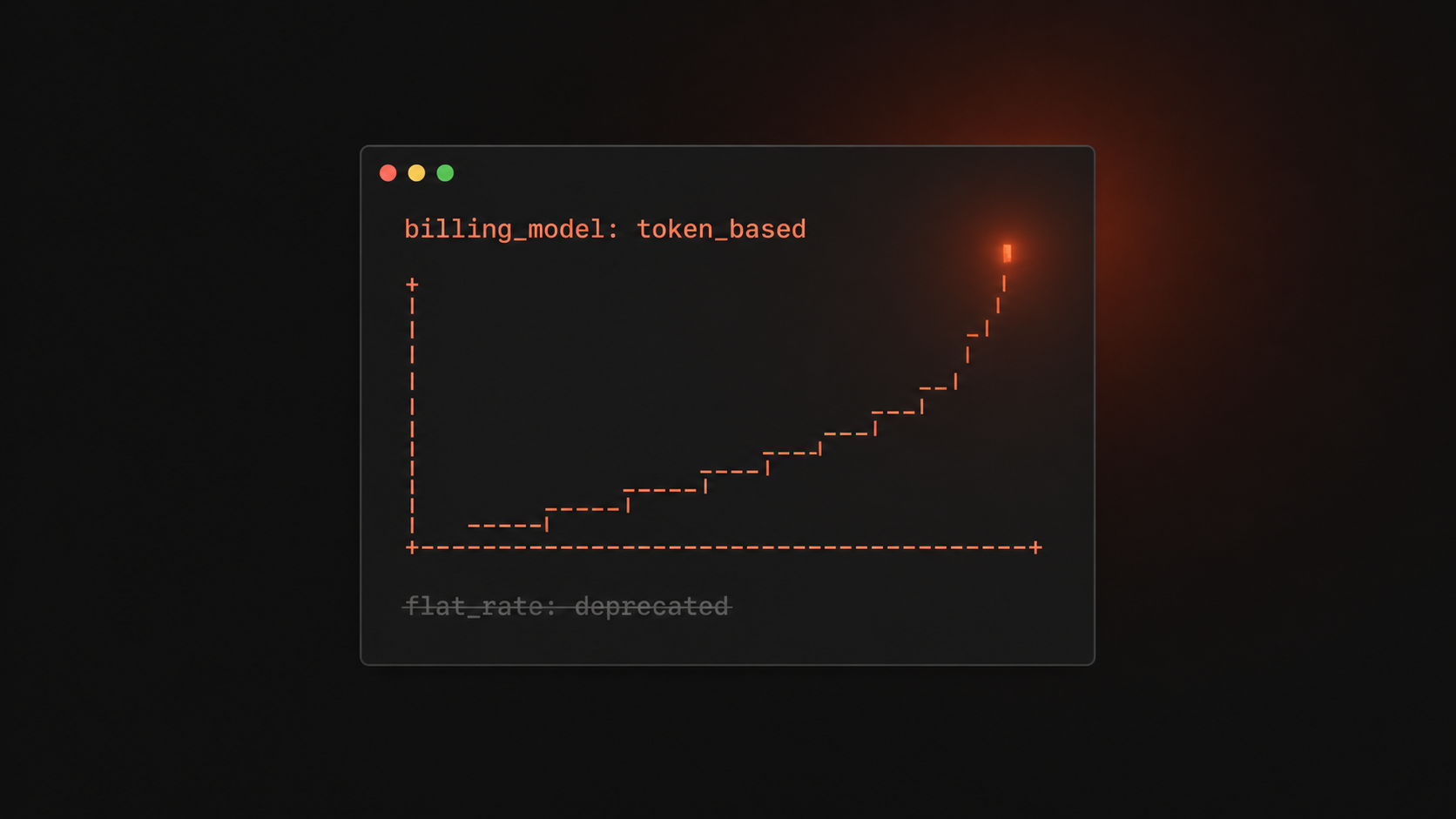
June 1, 2026 — Flat monthly pricing ends. Copilot moves to token-based billing, meaning you pay based on what you actually use, not a fixed amount per month.
Why did all of this happen? GitHub said it themselves in leaked internal documents: the weekly cost of running Copilot doubled since the start of 2026.
They were losing money on every power user, especially students who were running Opus models constantly on a free plan.
The Amazon Bedrock Situation
Amazon Bedrock is a different kind of problem.
It was never cheap or easy to access, but it's getting more complicated.
Models on Bedrock go through three stages: Active, Legacy, and then end-of-life. Once a model moves to Legacy status, new customers cannot use it at all. Existing customers can keep using it — but pricing can increase during that period as set by the model provider.
The bigger frustration developers are hitting right now: the access
request process. You need the right IAM permissions, AWS Marketplace
subscriptions, and for Anthropic models specifically, you have to fill
out a use case form before your first call. If anything is misconfigured,
you get an AccessDeniedException and have to debug your way through
AWS policy layers.
It's not that Amazon is being malicious. It's that at enterprise scale, they need cost controls and governance baked in. But the side effect is that individual developers and small teams feel locked out of models they expect to be accessible.
Why Is This Happening Everywhere?
This is the part that actually matters.
AI companies spent the last three years buying customers with unsustainably cheap pricing. The logic was: get developers hooked, grow the user base, figure out the business model later.
Later is now.
Running a frontier AI model is genuinely expensive. Every time you send a message to Claude Opus or GPT-4, it costs the provider real money in compute. When millions of developers use these models continuously, that adds up fast.
The math is brutal. One founder in Europe put it plainly: a single small task on a cheaper model costs around $5. Running Claude Opus continuously through a monthly plan at the current pricing is not sustainable for the companies offering it. They are either losing money or barely breaking even on power users.
So what happens? They do exactly what GitHub did:
- Move expensive models to higher-tier plans
- Switch from flat fees to usage-based billing
- Tighten limits so casual users don't burn through expensive compute
- Remove free access for students and developers who were never going to pay anyway
What Token-Based Billing Actually Means For You
This is the shift that will hurt the most.
Right now, you pay $10 or $39 a month and use Copilot however you want within the limits. Starting June, Copilot charges per token — meaning every line of code it reads, every suggestion it makes, every chat message you send has a cost attached.
If you're a light user, this might actually be cheaper.
If you're a developer who uses Copilot heavily all day — running agent mode, asking it to read large files, using it for code review — your bill could be significantly higher than what you pay now.
The Uber CTO already burned through his entire 2026 AI budget due to token costs. That's at enterprise scale, but the principle applies to individual developers too.
What Developers Should Actually Do About This
Track your real usage before June. Before Copilot switches billing models, understand how heavily you actually use it. VS Code now shows your usage limits. Check them.
Stop using the most expensive model for everything. Opus-level models are overkill for most tasks. Autocomplete, small edits, explaining code — a cheaper model does this fine. Save the expensive model calls for complex reasoning tasks where it actually makes a difference.
Have a backup tool ready. Cursor, Windsurf, and Claude Code all work differently. If Copilot's new pricing doesn't work for you after June, you should already know what you're switching to before you're forced to decide in a hurry.
For Bedrock specifically — sort your IAM setup now. If your team uses AWS and plans to use Bedrock models, get the permissions and use case forms done now, not when you need it in production at 2 AM.
The Honest Reality
Free and cheap AI access was always temporary.
The companies building these tools spent billions training the models and billions more running them. At some point, that bill gets passed to users. We're at that point now.
This doesn't mean AI tools aren't worth paying for. For most developers using them seriously, they genuinely are. But the era of getting Opus-level models for $10 a month with no real limits is over.
The developers who will be fine are the ones who understand their actual usage, pick the right tool for the right task, and treat AI tools like any other professional software cost — something you budget for and use deliberately.
The developers who will be frustrated are the ones expecting 2024 pricing in 2026.
Written by Abdul Momin · Full Stack Software Engineer Sources: GitHub Copilot Changelog April 2026 · GitHub Community Discussions · Pragmatic Engineer Survey 2026 · Axios April 2026